
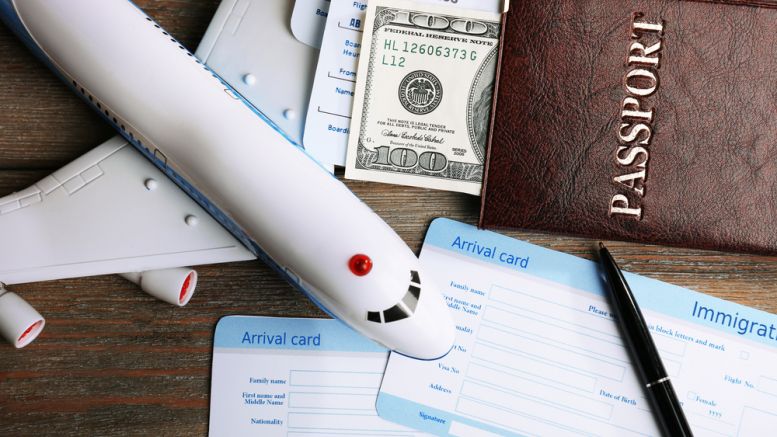
Streamlining Travel with Blockchain Identity Verification
No more fumbling with a passport, travel IT company SITA thinks that blockchain may allow us all to streamline travel. Traveling has definitely become a chore. Long lines, tight spaces, overcrowded travel hubs. A measure of patience and a little bit of luck go a long way. The travel tech company SITA has a proposal that can at least help with streamlining traveler identification. The group has proposed using blockchain tech to power a single and secure biometric identification process. The goal would be to allow travelers to prove their identity utilizing a wearable or mobile device....
Related News

Blockchain startup ShoCard has developed a proof-of-concept focused on digital identity in partnership with a major IT firm that works with the airline industry. SITA, founded in the late 1940s, provides IT and communication services to the global airline industry, and is owned by a broad network of major air travel service providers, account for roughly 90% of all airlines. The identity app, dubbed the SITA Digital Traveler Identity App, was formally unveiled today during the Air Transport IT Summit industry conference, held in Barcelona, Spain. Using a blend of blockchain-based data and....

The integration will mean Rakuten Travel Xchange customers can opt to use ShareRing's self-sovereign identity app to access bookings.

The Science and Technology (S&T) Directorate of the US Department of Homeland Security is supporting four small firms with funds to use Blockchain technology to support identity management. What are those Blockchain firms? Digital Bazaar, Respect Network, Narf Industries and Celerity Government Solutions will all get $100,000 each. They fall under the Applicability of Blockchain Technology to Identity Management and Privacy Protection research topic. The topic is to use Blockchain technology, which centralizes and validates new entries added into an existing data field to support....
South African fintech company ThisIsMe (TIM), which focuses on identity verification, has announced that it will be adding blockchain technology to boost its services and is expected to go live in 2017. More companies are turning their attention to bitcoin’s underlying distributed ledger, the blockchain, as they realize the potentials it can deliver. Only recently, the major Spanish energy company Endesa revealed that it is planning on opening a blockchain laboratory in a bid to boost development of blockchain-based solutions for the energy industry. It’s also being used in other areas....
The exchange moved deadline for identity verification from Feb. 2021 to Nov. 2020