

Over 1,900 block-producing nodes in the Solana ecosystem, new report reveals
Solana released its first "Validator Health Report" post-wallet hack, which reveals 3,400 validators across six different continents. Solana released its first-ever, "Validator Health Report" which revealed information on its network operators. According to the report the network has over 1,900 block-producing nodes with nearly 1,688 (88.14%) of those run by independent entities. Solana says the health and strength of its validators is critical to the long-term health of the ecosystem. Previously, the network has faced backlash for both a lack of decentralization and expensive validator....
Related News

The Solana network has seen its validator count crash by more than 68% over the past three years, falling from thousands of active nodes to just around 800. The massive decline in validators has sparked discussions about whether this could become a threat to the blockchain network or a natural pruning of inactive nodes to increase efficiency. Solana loses 68% Of Its Validators In 3 Years A new report from Criptonocias reveals that Solana has experienced a dramatic decline in the number of its validators, active and non-active, since March 2023. This decrease has raised concerns across the....

The report also found that a transaction on the Solana blockchain uses 24 times less energy than charging your phone. A transaction on the Solana network takes less energy than two Google searches, and 24 times less energy than charging your phone, according to a Nov. 25 report by the Solana Foundation.The report states that a single transaction on its network uses 0.00051 kWh, or 1,836 Joules, of energy. According to Google, an average search uses 0.0003 kWh or 1,080 Joules of energy. Perhaps more surprisingly, the report claims the entire Solana network uses an estimated 3,186,000 kWh....

It's well known that bitcoin is designed as a decentralized peer-to-peer (P2P) network. However, what's often lost in translation is the sheer amount of machinery that is needed to maintain this global infrastructure. For example, in order to validate and relay transactions, bitcoin requires more than a network of miners processing transactions, it must broadcast messages across a network using 'nodes'. This is the first step in the transaction process that results in a block confirmation. To function to its full potential, the bitcoin network must not only provide an avenue for....
With the introduction of platforms like Solana, buyers may now purchase NFTs for a low transaction charge and with minimal congestion. The burgeoning popularity of nonfungible tokens (NFTs) has led to issues like exorbitant transaction fees and congestion in the prevalent Ethereum-based ecosystem. The fee factor serves as a major deterrent to anyone wanting to execute transactions on the blockchain.A report published by Reuters revealed that the NFT sales volume was $24.9 billion in 2021, considerably more than the $94.9 million in 2020. The number of wallets trading in NFTs jumped to....
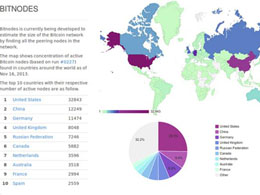
The huge growth in Bitcoin has almost everything to do with the Chinese's recent interest in the digital currency. According to Bitnodes, it looks like China has overtaken Germany in having the second most Bitcoin nodes in the world, with just over 12,000 being the estimate. China trails behind the United States, which has close to 33,000 nodes at this time - so they've still got some catching up to do. Bitcoin nodes are critical parts of the Bitcoin network. These nodes are typically run by ordinary people or mining groups and are responsible for updating the ledger (block chain) with the....